
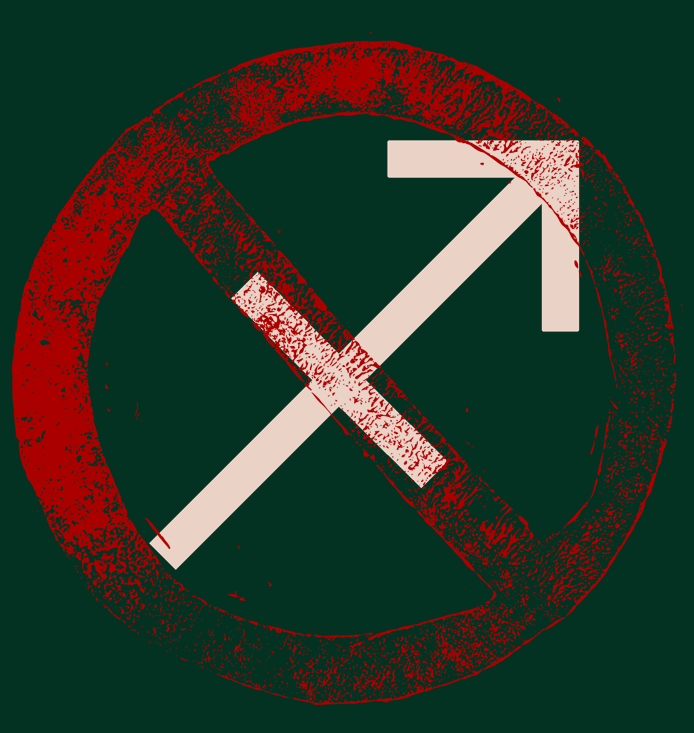
Jupiter in Cancer. Last night, at 12:02 AM Romanian time, Jupiter, the planet of abundance and expansion, entered Cancer, where it will remain for the next 12 months. Known as the Greater Benefic and as the largest planet in the solar system, Jupiter is associated with luck, truth, and wisdom. It’s a catalyst for growth and it acts as a magnifying glass, amplifying the energy of any planet or point it passes over.
The last time Jupiter was in Cancer was in 2013–2014, and so themes or situations from that period may re-emerge or appear in similar forms—especially those related to the authenticity of our emotions, our emotional development, or the confrontation of truth and gaining a new (perhaps even optimistic) perspective on our past and emotional wounds. With its ingress into Cancer, Jupiter forms a conjunction with Mercury and squares Neptune and the newly-entered Saturn in Aries. This tense aspect amplifies the need for truth, for naming things as they are, for daring to show ourselves in full vulnerability, to express our emotions with authenticity and courage—or to sublimate them by channeling them into creativity and art.
In Cancer, Jupiter is exalted, and this transit especially affects those with personal planets in the cardinal signs: Aries, Cancer, Libra, and Capricorn. Cancer is ruled by the Moon, and starting today, the Moon is in Sagittarius, culminating in a full Moon in the same sign tomorrow, June 11th.
The full Moon generally places us with one foot in each boat—both the conscious and the unconscious—and it brings revelations, epiphanies and an increased clarity. It’s the perfect moment to release things, habits, thoughts, emotions (including people) that no longer serve us. The Moon in Sagittarius and Jupiter in Cancer are in a mutual reception—each planet is in the sign ruled by the other—this mutual reception being likened to a genetic mutation that blends the attributes of the signs and the harmonious energies of the planets, creating a new, extremely favorable archetypal symbiosis. This symbiosis challenges us to explore those hidden or repressed emotions, to bring the unconscious into consciousness, letting our inner wisdom guide our personal catharsis and viceversa. It invites us to become familiar with the stranger within.
The Great Father-Serpent. The energy of these events is beautifully captured in The Hero with a Thousand Faces by Joseph Campbell, where he describes an initiation ritual of an Australian tribe involving the Great Father-Serpent. At puberty, boys undergo an initiation ceremony marked by circumcision, symbolizing the transition into maturity. They are taken to a sacred space where only men are allowed, and there, the Great Father-Serpent comes to claim the price of crossing this threshold: the boys’ foreskin.
The myth says the Great Father-Serpent comes to swallow them, which is considered to be true. The fear felt by the initiate reaches its peak. During this time, mothers and grandmothers mourn their sons—this wailing acts as a form of energetic protection. The father plays the negative role, tearing the young boy from the paradisiacal breast of the mother. From this, the desire to destroy the father transforms into a desire for war. In the meantime, the mourning mothers and grandmothers energetically shield the young, and their protective presence establishes a new paradise.
The ultimate purpose of this ritual is to sever the umbilical cord and free the youth from maternal dependency, by confronting the paternal archetype in order to individuate. Essentially, “the elders of the tribe protect themselves from their growing sons through the psychological magic of totemic ceremonies.” Campbell points out something crucial: this initiation through ego annihilation is a partial initiation. Instead of dedicating themselves to inner purification, the initiate devotes themselves to society, marking “the dramatic divorce between the two principles of love and hate, which the pages of history illustrate so generously.” The newly established paradise excludes foreigners, and aggression is projected outward. Everything good is attributed to the familiar group, while evil is projected onto outsiders. For the initiate, “the laws of the City of God apply only to the members of their group (tribe, religious community, nation, class, or otherwise), while the fire of a perpetual holy war is unleashed upon every uncircumcised, barbarian, pagan, aborigine, or foreigner who happens to be their neighbor.”
Speaking of foreigners, I’ve always felt like an outsider. Although I have a Scorpio ascendant, over three-quarters of my first house (the house of identity) lies in Sagittarius, and Saturn in Sagittarius has brought me many lessons about foreignness, dogma, truth, and religion. While I am writing this, the Moon in Sagittarius is passing over my progressed Moon and tomorrow it will cross my natal Saturn. I’ve always felt like a stranger, but I never thought about the stranger within me until I met Maisa.
Maisa. October 2022. I board the subway just as it’s stopped in the station. Lucky, I caught it! I’m feeling good—peaceful, joyful, grateful—a feeling I haven’t had in a long, long time. Today and tomorrow, I’m attending the second module of the psychotherapy training I enrolled in this summer. Just before the doors close, a mother and her daughter hop on. The mother is loaded with several plastic bags, and the little girl finds a seat across from me, saving a spot for her mother. She’s fidgety, bouncing between seats. The mother tells her to pick one and sit already. This beautiful little girl, with olive skin and ebony hair, looks at me and beams with a wide smile. She sits next to me. I look at her and see myself as a little girl. Not so long ago, I was the one dancing around, twirling my brand-new denim skirt from Cocor, singing “Lambada” freely under the stern eyes of a strange lady on the tram. My mom tried in vain to calm me down. I was so happy!
I asked for her name, and with her deep black eyes she answers quickly: “Maisa.” I compliment her and tell her I also have a little boy. She probably felt safe enough to quickly tell me that she’s half Romanian, half Algerian, that she loves Algeria, that she’s in the first grade, and that she doesn’t like school because her religion teacher won’t let her attend class since she’s Muslim. My stomach turns at the thought that such a sweet little girl is being made to feel like an outsider, like she’s different and that she doesn’t belong. I think of how lucky I was to have had Ms. Flori as my religion teacher. A woman who never discriminated between children, especially the Roma kids. We all loved and respected her. A woman who not only made me believe in God—she made me feel God.
Maisa’s story reminded me of the ending of a short story by Panait Istrati, Kir Nicola. Istrati’s works were mandatory reading in our home. Known as “the rebel man and the vagabond artist,” he wrote about heavy, even taboo subjects. My father saw them as educational. Kir Nicola, an Albanian pastry-maker in a Brăila neighborhood, sums up people’s aversion to foreigners in a splendid way: “Here’s my pain! To my friends, I’m usually a goose to be plucked. To the barracks, a cow to be milked. To the neighborhood, ‘a lousy Albanian!’ To my poor Zincuţa, a ‘damned nation.’ And I’d like to be a brother to everyone, but no one wants me. No one wants to help a man who was born kind to stay kind—and even less so, to become kind if he wasn’t lucky enough to be born that way.”
We’re on the platform at Piaţa Victoriei. I’m waiting for the train to Ștefan cel Mare; she and her mother are headed to Basarab. We talk as if we’ve known each other forever. I feel so connected to this little girl and wonder what I can do for this beautiful child that only God knows why He brought into my path. I hear the train coming and tell her what a joy it’s been to meet her. I get on and wave goodbye. The doors close, and this little stranger who stole my heart leaves me with perhaps one of the most beautiful memories: she makes a heart with her tiny hands.
Tears still come to my eyes when I think of how much love can live in the chest of a little stranger. And how much love she mirrored back to the stranger within me. That little stranger lovingly and wisely set free the Great Stranger within me.